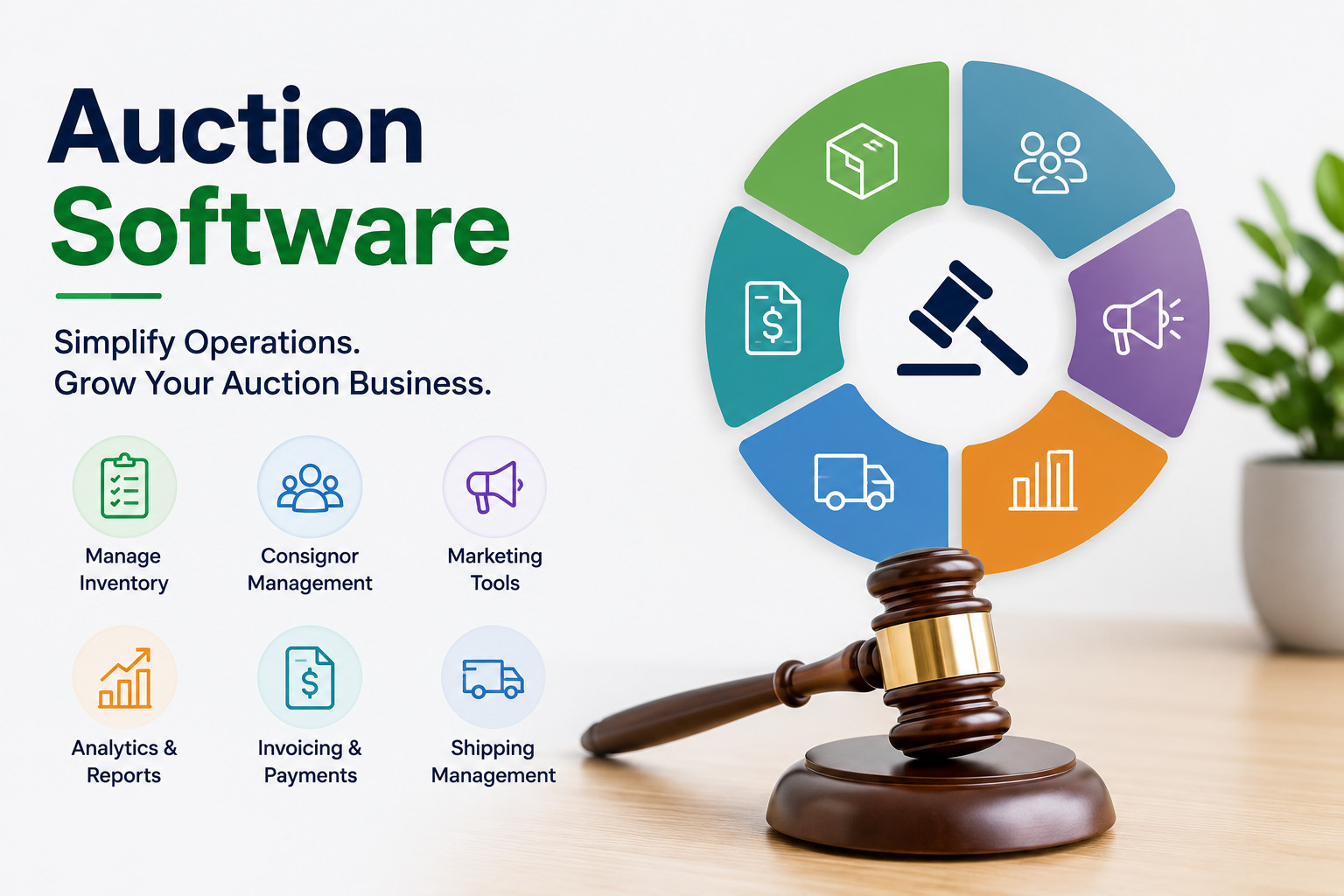
What Is Auction Software and Why Does Your Auction House Need It?
The auction industry has evolved far beyond traditional bidding rooms and paper catalogs. Today, auction houses are expected to manage online bidding, communicate with consignors, market events, process payments, and handle shipping—all while providing a smooth experience for bidders.
Trying to manage these tasks manually can quickly become overwhelming. This is where Auction Software helps. It brings all essential auction operations into one platform, making it easier to manage events, save time, and improve efficiency.
The Growing Role of Technology in Auctions
Modern buyers expect convenience. They want to browse lots online, place bids from their mobile devices, receive instant updates, and complete transactions quickly.
At the same time, auction teams need tools that help them organize inventory, manage consignments, track bidder activity, and oversee auction performance.
Instead of relying on multiple systems, auction software provides a centralized solution that keeps everything connected and organized.
Managing Auctions from One Platform
One of the biggest advantages of using auction technology is having a single place to manage daily operations.
From creating lot listings and tracking inventory to monitoring bids and generating reports, auction teams can access everything through one dashboard. This reduces manual work and helps staff spend more time focusing on customers and auction growth.
A centralized platform also improves accuracy by reducing the risk of missed information or duplicate data entry.
Improving the Consignor Experience
Consignors play a critical role in every auction. They want transparency, timely updates, and confidence that their items are being managed properly.
Dedicated consignor tools allow sellers to view their inventory, track auction results, and access settlement information through an online portal. Automated calculations and reporting simplify administration while helping build stronger consignor relationships.
Attracting More Bidders
Even the best auction inventory needs effective promotion. Marketing tools help auction houses reach potential buyers before an event begins.
By analyzing bidder interests and behavior, auction teams can create targeted email campaigns that deliver relevant information to the right audience. This helps increase participation, improve bidder engagement, and encourage competitive bidding.
The result is often greater visibility and stronger auction performance.
Turning Data into Better Decisions
Successful auction houses rely on data to understand what is working and where improvements can be made.
Advanced reporting and AI-driven analytics provide insights into bidder activity, auction performance, and marketing effectiveness. These insights help auction professionals make informed decisions, identify trends, and optimize future events.
Having access to real-time information allows teams to react quickly and improve results over time.
Supporting Growth Without Added Complexity
As auction houses grow, operational demands increase. More inventory, more bidders, and more events can create additional challenges.
The right software helps scale operations without adding unnecessary complexity. Features such as automated invoicing, integrated shipping management, inventory tracking, and white-label branding allow auction houses to expand efficiently while maintaining a professional experience.
This flexibility makes it easier to adapt to changing market demands and customer expectations.
Conclusion
The modern auction industry requires more than traditional tools and manual processes. Auction Software helps auction houses manage inventory, support consignors, engage bidders, automate workflows, and make smarter business decisions from a single platform.
Discover how Auction Algo's all-in-one, AI-driven auction software can help your auction house streamline operations and deliver better auction experiences at https://www.auctionalgo.com/.